



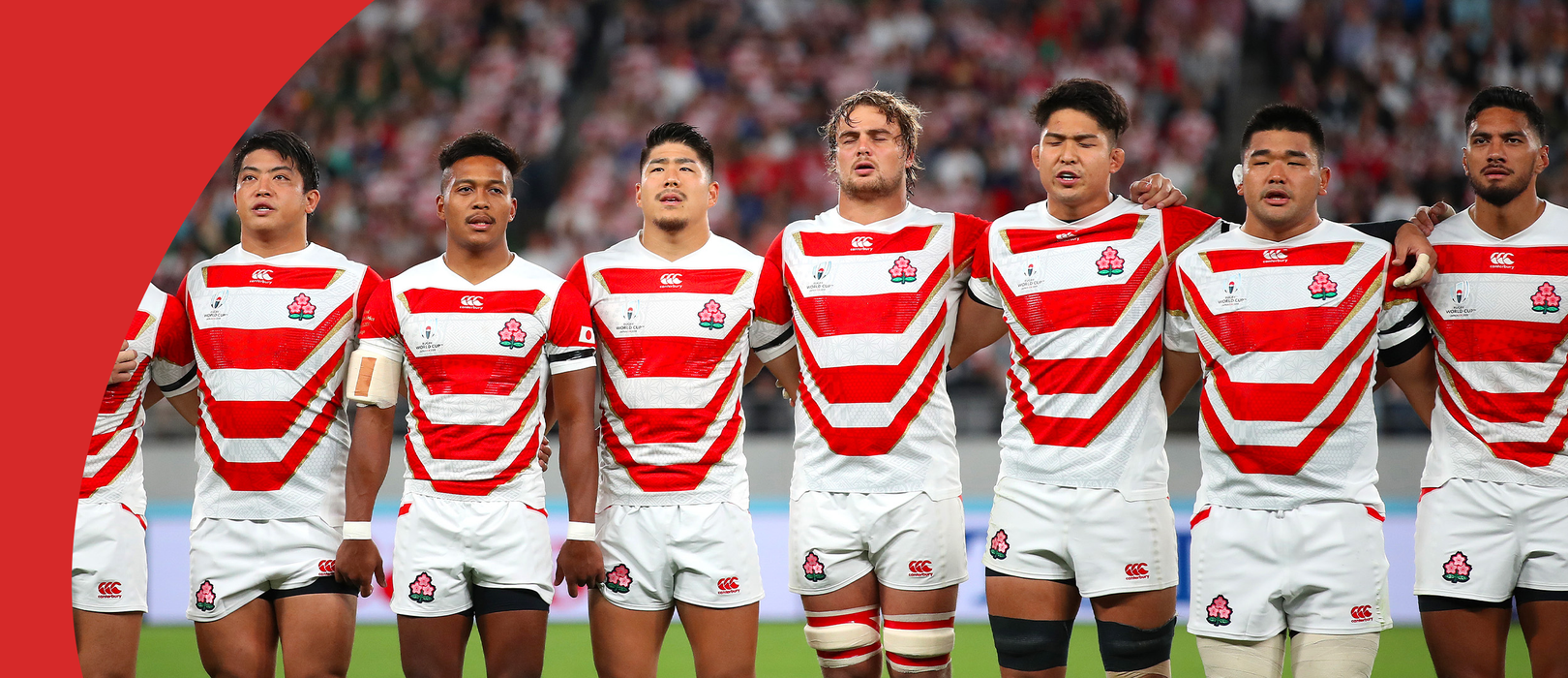

With more big-game experience under their belt, Japan will aim to pick up at least two pool wins to reach the knockout stages at Australia 2027.
Japan have probably had their best preparation for any Rugby World Cup, having played 10 matches against top-10 ranked nations from 2024 to mid-2026, prior to facing some of them again in the Nations Championship.
They picked up nine test wins during that period, of which three were against USA (twice) and Samoa – both of whom are pool rivals in Australia.
Japan play a ruck-and-run, high-tempo game where the ball is typically shifted before contact. When they get it right and make the contest aerobic rather than set-piece focused, they can run bigger, more physical teams off their feet.
The Brave Blossoms will feel with the big game experience they have gained, they can pick up at least two wins to progress to the knockout stages. But they have to be innovative at the lineout, where they only have one two-metre athlete compared to other nations, while their scrum has also been vulnerable against higher-ranked opposition.
Players to watch
Warner Dearns
Born in New Zealand, the 2.02m Dearns was capped at second-row by Japan at just 19 after moving there when he was 14 and starring for Brave Lupus, who he helped to two league titles before moving to the Hurricanes for the 2026 season. He is athletic, tough, mobile and a natural leader – with responsibility for Japan’s lineout.
Mamoru Harada
Harada represents the new generation of Japanese players who have emerged through their domestic Japan Rugby League One competition, benefitting from the improving standards of coaching and support. The bustling hooker is renowned for his work-rate, high standards and technical discipline, broadening his game by playing for Moana Pasifika in Super Rugby Pacific.
Naoto Saito
Saito may be small in stature, but he has the heart of a lion and the strategic mind of a fox, which is why he’s Japan’s tactical general. Brilliant at controlling the tempo of games from scrum-half, he is a sharp passer, good kicker and smart decision-maker.
RWC icon
The New-Zealand-born Michael Leitch captained Japan to their famous win over South Africa at Rugby World Cup 2015 and in their brilliant run as hosts at RWC 2019, when they made the quarter-finals after beating both Ireland and Scotland.
Now 37, Leitch is internationally recognised as one of the toughest and most resilient flankers in the global game and one of the most significant contributors to Japan’s last three Rugby World Cup campaigns.
RWC cult hero
It was Kazuki Himeno’s standout performances in Japan’s Rugby World Cup 2019 campaign that made him such a popular figure in his homeland, where he is the face of many endorsements.
His determined ball-carrying, willingness to throw everything into his defence and relentless work-rate won him many admirers and earned him the captaincy for the 2023 tournament.
In 2021, the 1.87m, 108kg number eight became a fan favourite in New Zealand after a season playing in Super Rugby Aotearoa for the Highlanders – helping them reach the Trans-Tasman final.
Head coach
Eddie Jones will arguably be the best-known coach at Rugby World Cup 2027, having also been in charge of Australia twice (he was at the helm in 2003 when the Wallabies made the final, as well as in 2023 when they suffered a first pool-stage exit), taken England to the final at RWC 2019, helped South Africa to victory at RWC 2007 as a technical adviser and also guided Japan to a stunning upset win over South Africa at RWC 2015.
Jones is a deep thinker, a brilliant strategist and a fantastic raconteur, and will have been planning this 2027 campaign in detail from the day he started his current job in early 2024.
His mother was born in Japan and he has often said that he was inspired by her resilience, hard work and capacity to face adversity.
Memorable match
Japan’s 34-32 victory against South Africa at Rugby World Cup 2015 is considered the greatest shock in rugby history – so much so that a feature film called The Brighton Miracle was made about it.
Up against the Springboks, one of the tournament favourites, Japan were given no chance of winning and yet they somehow found a way to stay in the fight, to keep conjuring tries and deal with their opponents’ set-piece power.
At 32-29 down and the clock on 83 minutes, Japan, who twice opted not to kick penalties to earn a draw in favour of going for the win, orchestrated a brilliant series of attacks that led to replacement wing Karne Hesketh scoring in the corner – sending a nation delirious.
Pool journey
3 October, 2027 v Samoa (Newcastle│Awabakal-Worimi)
9 October v France (Brisbane│Meeanjin)
15 October v USA (Adelaide│Tarntanya)
Did you know…?
Japan not only has the world’s oldest continuous, hereditary monarchy – it dates back more than 2,600 years – but it also has the highest number of vending machines. There are an estimated 5.5 million in Japan, dispensing everything from cold drinks and hot meals to shirts and shoes.
The rationale for having one machine for every 25 people is cost. With Japan’s ageing population, it is significantly cheaper to dispense food this way.
RWC history
Quarter-finals (1) – 2019
Pool stage (9) – 1987, 1991, 1995, 1999, 2003, 2007, 2011, 2015, 2023
Key stats
Of teams to have played 10 or more games at Men’s Rugby World Cup, Japan have the lowest average of penalties conceded per game (9.4).
Japan are the only team to have won three games in the pool stages of a Rugby World Cup and not advanced to the next round, beating South Africa, Samoa and USA in Pool B of the 2015 edition but suffering a heavy defeat by Scotland (45-10).
RWC Fast facts
- RWC debut: 1987
- RWC best finish: Quarter-finals (2019)
- Most RWC appearances: Michael Leitch (17)
- Top RWC try scorer: Kotaro Matsushima (5)
- Top RWC points scorer: Yu Tamura (51)